

The montanera and its importance
What lies behind the unmistakable flavor of 100% acorn-fed Iberian ham? What is it about that flavor that makes our taste buds tingle? What is one of the secrets—and there are undoubtedly many—that this jewel holds to delight everyone? The answer is quite simple: the montanera (acorn season).
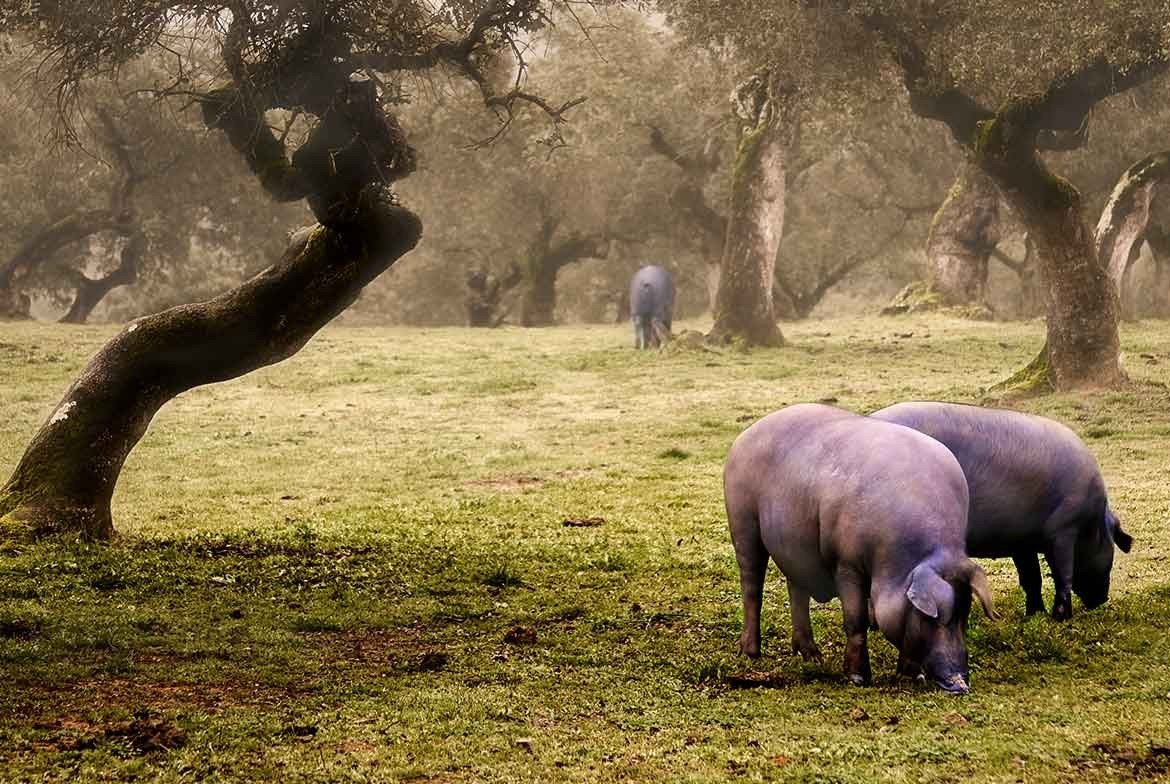
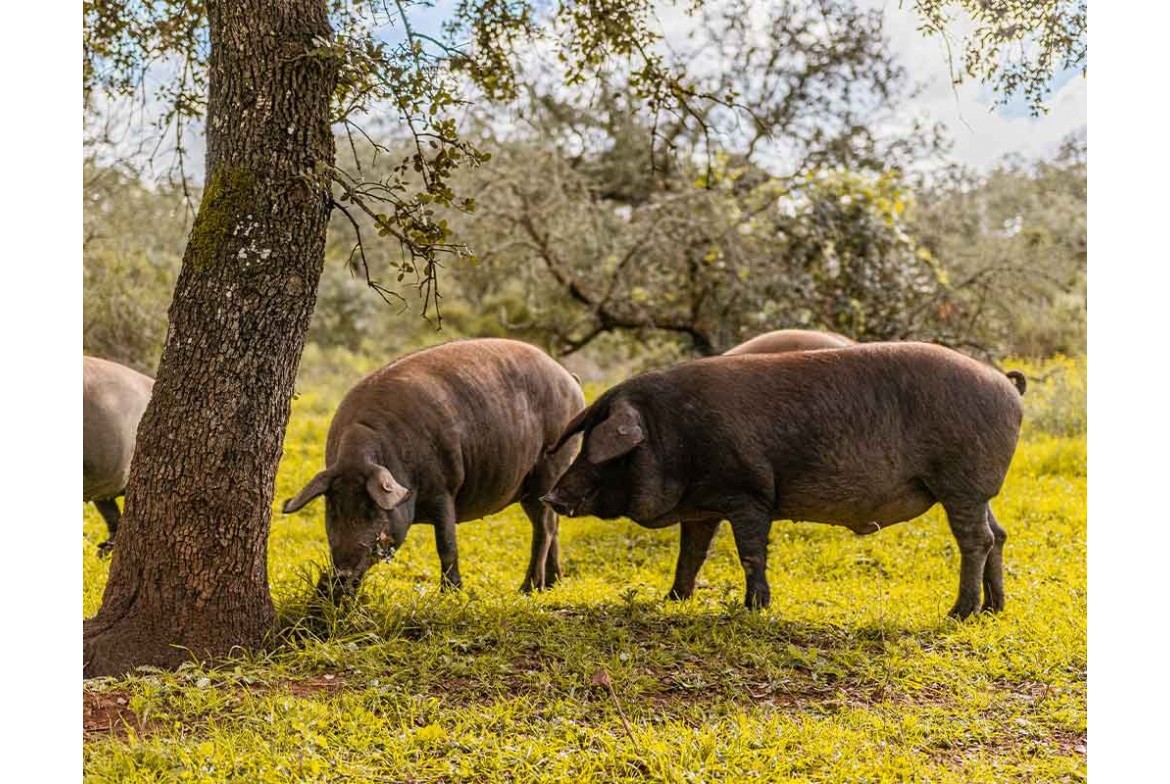
The montanera is the final stage of Iberian pig farming. During this period, the animals graze freely in the dehesas (pasturelands) and feed primarily on acorns and grasses. The montanera runs from October to March, coinciding with the optimal ripening time for acorns from holm oaks and cork oaks, as well as mushrooms and autumn fruits. These foods, while less abundant, also contribute to the pig's diet, providing their delicious nuances for both taste and smell. Furthermore, this rich diet is also responsible for giving the ham its cardiovascular benefits.
Another reason why authentic Iberian pork is inconceivable without the montanera (acorn-feeding season) is the freedom the animal enjoys in the dehesa (pastureland). Diet, exercise, genetic purity, and the animal's own quality are just some of the many factors that determine the irresistible flavor of each ham. These factors result in optimal fat marbling within well-developed muscles. The fattening of the acorns makes them more nutritious and palatable for the animals, increasing their intake and contributing to a juicier, more aromatic, and well-rounded flavor in Iberian products. The abundance of water is essential, allowing the animals to drink without having to exhaust themselves by traveling kilometers to the few water sources available during droughts. The growth of the grass in the dehesa is another factor to consider in the quality of the montanera. Fresh grass allows Iberian pigs to consume it along with the acorns, making them even more appealing.
The montanera season generally lasts from the end of October (or November) until March of the following year. During this time, an Iberian pig spends virtually all its time eating and drinking. Each pig can consume more than 50 liters of water a day and eat up to twelve kilos of acorns and five kilos of grasses, plants, roots, and mushrooms. This entire diet will cause the Iberian pig to gain more than 50% of its final weight.
But the dehesa is capricious and delicate, and it doesn't offer us the same emblematic landscape every year. Each year we must rely on the weather and wait for the rain to fall at the exact moment, for the grass to grow in abundance, for the fruit to ripen and acquire the right quality to achieve the exquisite flavor characteristic of acorn-fed Iberian ham.
Therefore, we now know that many of the beneficial characteristics of Iberian products are due to this phase in the pigs' lives. Now, when we eat a good Iberian ham, we will know that much of its flavor, aroma, and quality depends, to a large extent, on a good montanera (acorn-feeding season).
Comments
No comment at this time!
Leave your comment